

Do you have a room in your house that is always too hot in the afternoon? Maybe it is the living room with the big sliding door. Maybe it is the bedroom that faces west. Even with the aircon on, it never feels cool.
The problem is often the glass. Windows let in light, but they also let in a lot of heat. In a hot country like ours, this adds up fast.
The good news is that you do not need to change your windows. A thin layer of window film can fix much of the problem. In this guide, we explain how window films in the Philippines work and how a heat rejection window film can make your space more comfortable.
How Heat Gets In Through Glass
Glass seems solid, but sunlight passes right through it. When the sun hits your floor, sofa, or desk, those things warm up. Then they give off heat into the room. The heat gets trapped inside.
This is why rooms with big windows get so hot. It is also why condo units with floor-to-ceiling glass can feel like a greenhouse.
The Worst Windows in the House
Not all windows get the same sun. Here is a simple guide:
- West-facing windows get strong sun in the afternoon, which is the hottest part of the day.
- East-facing windows get morning sun. It is softer but still adds heat.
- Skylights and glass roofs get sun almost all day.
- North and south windows usually get less direct sun in the Philippines.
If your budget is tight, start with the west side. This is where you will feel the biggest change.
What Is a Heat Rejection Window Film?
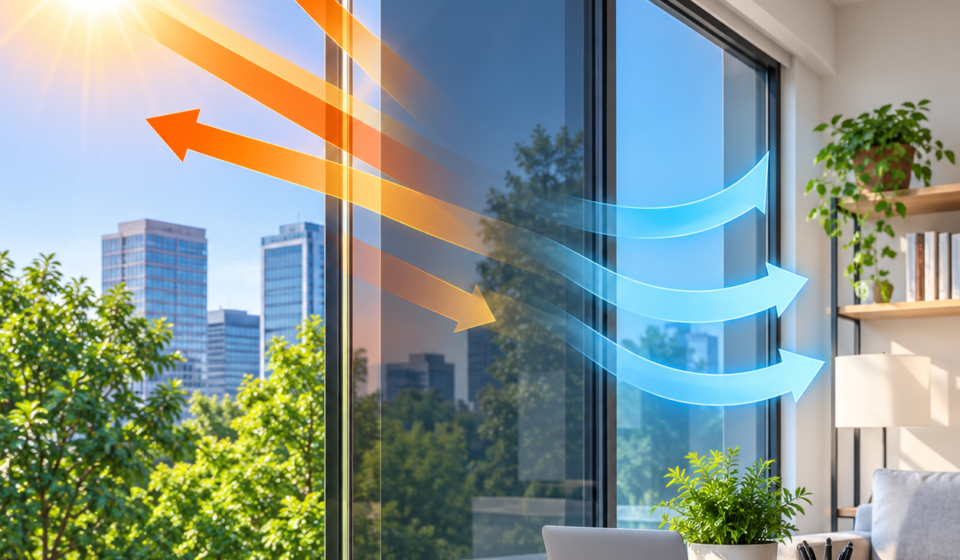
A heat rejection window film is a thin sheet stuck to the inside of your glass. It is made to stop the sun’s heat before it enters your room.
Most of the sun’s heat comes from infrared light. You cannot see it, but you can feel it. Modern films use special coatings or tiny particles to block this light. Visible light still passes through, so the room stays bright.
The Numbers to Look For
When you ask for a quote, look for these numbers on the spec sheet:
| Term | What It Means in Simple Words |
| TSER (Total Solar Energy Rejected) | How much of the sun’s total heat the film keeps out |
| IR Rejection | How much of the “feel-it-on-your-skin” heat it blocks |
| UV Rejection | How much skin- and fabric-damaging light it stops |
| VLT | How much light comes through, so how bright the room stays |
| Glare Reduction | How much it cuts harsh brightness on screens and eyes |
A higher TSER usually means a cooler room. A good film will also block about 99% of UV rays.
Benefits for Homes
A Cooler, More Comfortable Room
The first thing most people notice is that the room feels cooler near the window. You can sit on the sofa by the glass without feeling the sun burn your skin.
Lower Electric Bills
When less heat comes in, your aircon does less work. Over months, this can lower your Meralco or local power bill.
Less Fading
UV rays fade curtains, wooden floors, sofas, and photos. A film that blocks 99% of UV helps your things look new for longer.
More Privacy
Some films look like a mirror from the outside in the daytime. People outside cannot easily see in, but you can still see out.
Benefits for Offices and Shops
Offices have many windows and many people. Heat and glare can make work hard.
- Staff can work near the windows without squinting at screens.
- The aircon system works less, so costs go down.
- Products in shop windows do not fade as fast.
- The building looks neat and modern from the street.
Other Types of Window Films
Heat is not the only problem a film can solve. L.A. Window Films offers many kinds:
- Security and safety films hold broken glass together if a window is hit or breaks.
- Privacy films make it hard for people to see inside.
- Smart PDLC film can turn from clear to frosted with a switch.
- Decorative films, like chameleon film, add color and style to glass.
- Glare-control films soften harsh light for TVs and computer screens.
Some films can do more than one job. For example, you can get a film that blocks heat and also adds safety.
Things to Check Before You Install
Before you buy window films in the Philippines, think about these points:
- Which rooms get the most sun?
- Do you want the glass to look clear, tinted, or mirrored?
- Is privacy important at night? Some mirror films work in reverse after dark, when the inside is brighter.
- Does your condo or village have rules about how the outside of the glass looks?
- What kind of glass do you have? Some thick or double glass needs a special film.
A good installer will visit your home, check the glass, and help you answer these questions.
Why Choose L.A. Window Films for Window Films in the Philippines
L.A. Window Films started in 2003. Since then, they have served more than 35,000 clients across the Philippines. They have branch offices in Manila, Cebu, and Davao, and they install all over the country.
They handle homes, condos, offices, and commercial buildings. Their range covers heat rejection, security, privacy, smart film, and decorative film. This makes them a one-stop shop for most window needs.
Final Thoughts
Your windows do not have to be the hottest spot in your home or office. A heat rejection window film blocks the sun’s heat while keeping your view bright and clear. Start with the sunniest windows. Ask for the TSER and UV numbers. Then choose a trusted installer. With the right window films in the Philippines, you can enjoy a cooler, safer, and more comfortable space all year.