
A single translation error of dosage on a medicine label has the potential to convert a cure into a crisis. This is the reality faced by numerous patients who are forced to read their prescriptions, package inserts, and dosage information in a language that was never built with them in mind. Inability to understand the meaning of a doctor’s instructions on how much medicine to take, when to take it, and what to refrain from doing while taking it can end with consequences ranging from losing the dose to spending time in a hospital.
And this is exactly the place where pharmaceutical translation services perform their functions, turning complicated clinical language into something understandable and usable for patients. Read this blog till the end if you want to know how this process actually protects patients, keeps clinical meaning intact, and why a company like Semantics, known for its native language experts and strong global presence, is trusted to do it right.
What Are Pharmaceutical Translation Services?
Pharmaceutical translation involves translating drug labels, package inserts, trial documents, and patient information. Unlike simple translation, this work requires an understanding of medical terms, dosage rules, and laws that vary from country to country.
Role of Pharmaceutical Translation in Helping Patients Understand Medication Instructions
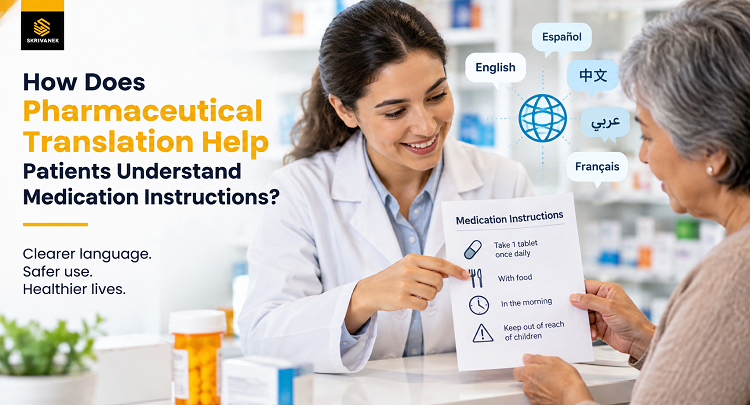
Clearly Stated Dosage Instructions
Translated instructions eliminate uncertainty regarding dosages and timings of medications. This ensures that patients will not make mistakes like overdosing or underdosing since the they are written in their language and in a clear way.
Properly Explained Side Effects
By receiving information about possible side effects in their native language, patients can identify the condition earlier. This results in reduced anxiety, missed reporting time, and complications due to misunderstanding vague or poorly translated instructions.
Clearly Defined Interactions
Certain drugs come with a warning regarding their incompatibility with other drugs, food, or alcohol. Accurate translations of these warnings ensure everyone knows about them and avoids dangerous situations.
Supporting Informed Consent
Before starting treatment or enrolling in trials, patients should understand what they are consenting to. With translated consent documents, patients receive true clarity rather than just signing off with little understanding.
Creating Trust Between Patients and Medical Providers
When instructions are provided in the patient’s own language, they feel respected and involved in their own treatment. This generates trust in their treatment plan and enables patients to adhere to it properly. More areas where pharmaceutical translation has an impact include:
- Pharmaceutical counseling pamphlets given to patients with prescriptions
- Instructions for emergency purposes for home health devices
- Labels in foreign languages that are used for prescription drugs sold internationally
Final Thoughts
It is necessary for the medication instructions to be clear in any language to ensure patient safety. Semantics is the solution for translating complex medical jargon into comprehensible language used by patients. We are an ISO 27001, ISO 9001 & ISO 17100 certified company with over 5,000 native speakers of almost 150 languages working for us. Other accomplishments include 15 years in operation and 2,500 completed projects across industries. So get in touch today and discuss your requirements for pharmaceutical translation services with us.
FAQs
What makes pharmaceutical translation more specialized compared to general translation?
Pharmaceutical translations contain specific complexities that require a strong understanding of pharmaceutical terminology, dosages, and regulations, as even minor errors in clinical paperwork can jeopardize patients’ health.
Who needs pharmaceutical translations?
Pharmaceutical businesses, hospitals, clinical research institutions, and governmental organizations use these services to get accurate information about drugs and communicate it across different countries and languages.
Is it possible to use machine translation to create instructions for medication?
It is not advisable to rely on machine translation for medical texts. It is vital to involve human specialists who can interpret subtleties and contexts that the machine may see incorrectly or not notice.
What are the different types of documents involved in pharmaceutical translation?
The documents that are involved in pharmaceutical translation include instruction leaflets, drug labeling, clinical trial documents, patient information leaflets, consent forms, and pharmacovigilance reports.
How does pharmaceutical translation contribute to patient safety?
By improving patients’ understanding of dosages, side effects, and warnings, it helps prevent the occurrence of drug administration mistakes and achieve high adherence to treatment.