
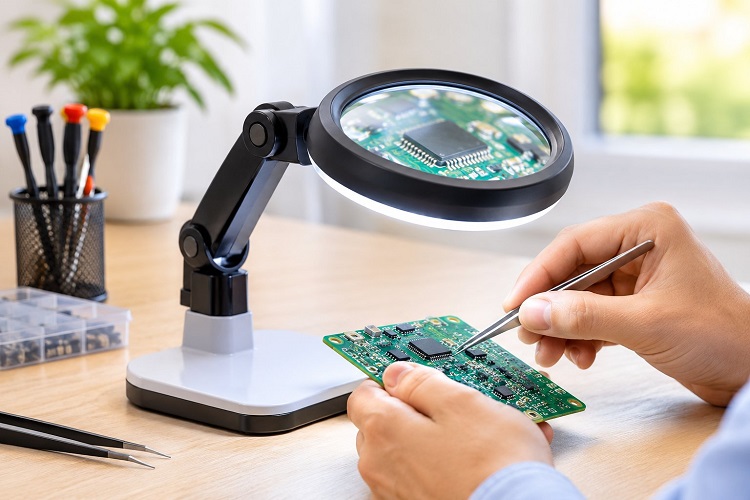

Small details can make a big difference, whether you are inspecting intricate objects, examining printed material, or working on precision-based activities. However, viewing these details clearly can become challenging when the task requires prolonged concentration. A stand magnifier for sale can be a practical addition to such workspaces, offering stable magnification without requiring users to hold the device continuously.
Unlike conventional handheld magnifiers, stand magnifiers are designed to rest on a surface, making close-up viewing more convenient. Understanding their benefits can help you decide which type suits your visual requirements.
Why Are Stand Magnifiers Useful for Close-Up Tasks?
A stand magnifier is an optical viewing device that uses a magnifying lens supported by a base or stand. Its design allows users to examine objects or printed material while keeping the magnifier positioned over the viewing area.
This hands-free arrangement offers several practical advantages:
- Stable viewing: The supported design helps keep the lens in position while examining small details.
- Convenient handling: Users do not need to continuously hold the magnifier during an activity.
- Consistent positioning: A fixed viewing setup makes it easier to maintain a suitable distance from the material.
- Better task concentration: Keeping both hands available can be useful when working with small objects.
These features make stand magnifiers worth considering for activities that involve frequent close-up inspection.
How Do Stand Magnifiers Improve Everyday Visibility?
1. Making Small Details Easier to Examine
Fine print, intricate patterns, and tiny components can be difficult to inspect with the naked eye. Magnification enlarges the appearance of these details, helping users observe specific areas more closely.
For instance, someone examining a small mechanical component can use a stand magnifier to view its finer features without repeatedly adjusting a handheld lens.
2. Keeping Both Hands Free
One of the biggest advantages of a stand magnifier is its hands-free functionality. Users can position the magnifier over their working area while using their hands for other activities.
This can be particularly useful for hobbies, detailed inspection, and tasks involving small materials that require careful handling.
3. Supporting More Comfortable Viewing
Holding a magnifying glass for extended periods can become inconvenient. A supported magnifier reduces the need for continuous hand positioning.
However, proper lighting, comfortable posture, and suitable lens positioning remain important for a pleasant viewing experience.
What Should You Consider When Looking for a Stand Magnifier for Sale?
Choosing an appropriate magnifier involves more than simply looking at its magnification strength. Consider these factors before making a purchase:
- Magnification level: Select a lens suited to the size of the details you need to examine.
- Lens clarity: Look for clear optics that provide a usable view of the subject.
- Working distance: Consider how much space you need between the lens and the material.
- Base stability: A well-supported design helps maintain consistent positioning.
- Intended application: Think about whether you need it for reading, inspection, hobbies, or other close-up activities.
Comparing these features can help narrow down suitable options.
Find a Suitable Magnifier for Your Viewing Needs
Improved visibility can make detailed activities easier to approach. A stand magnifier offers stable, hands-free magnification that supports close-up viewing without requiring continuous manual handling.
If you are exploring a stand magnifier for sale, consider the available stand magnifier options and compare their optical features, construction, and intended applications before choosing one.
Frequently Asked Questions
1. Is a stand magnifier suitable for reading small printed text?
Yes, a stand magnifier can help enlarge small printed text, making individual characters easier to examine. However, suitability depends on the lens magnification, viewing distance, and text size. Checking these factors before purchasing can help you select an appropriate option.
2. Can stand magnifiers be used for examining small objects?
Yes. Stand magnifiers can be useful when examining small components, intricate designs, and other objects with fine details. Their supported positioning allows users to focus on specific areas while keeping their hands available for handling the material.
3. What is the difference between a stand magnifier and a handheld magnifier?
A handheld magnifier needs to be held and positioned manually during use. A stand magnifier rests on a supporting base, providing hands-free viewing. The more suitable option depends on the task, preferred handling method, and viewing requirements.
4. Does higher magnification always mean better visibility?
Not necessarily. Higher magnification enlarges details but may also reduce the visible viewing area and change the working distance. The right choice depends on what you intend to examine. Consider both magnification strength and practical usability.
5. What should I check before buying a stand magnifier online?
Review the product’s magnification specifications, lens material, dimensions, base design, and intended applications. Product images and descriptions can also help you understand its construction. Comparing these details makes it easier to identify an option that matches your requirements.