
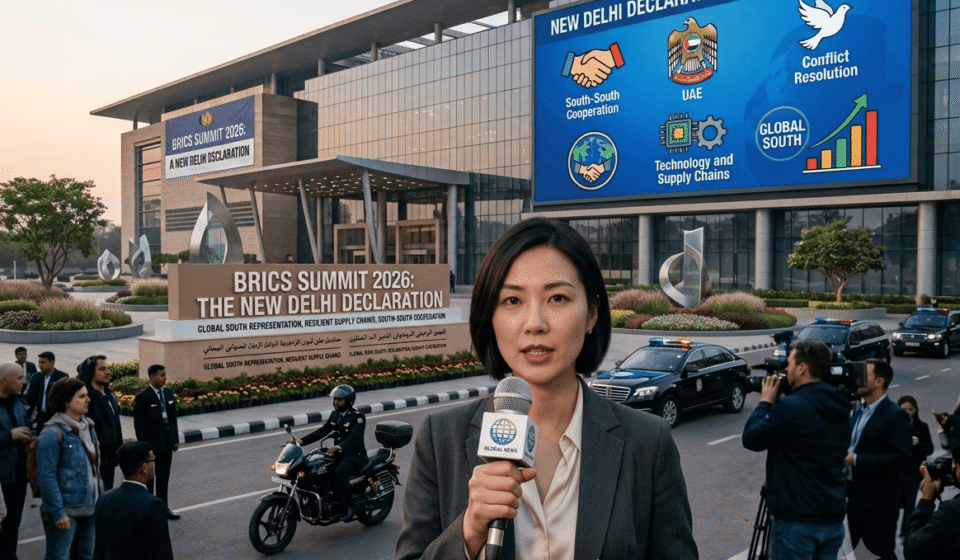
BRICS Summit 2026 Concludes with Strong Call for Global South Representation

New Delhi: The 18th BRICS Summit concluded on September 13 with the unanimous adoption of the New Delhi Declaration, reaffirming the bloc’s commitment to a more representative and equitable international system. International observers, including Uruguay’s Foreign Minister Mario Lubetkin and Philippines Foreign Secretary, have hailed India’s chairmanship as a “success” in navigating complex geopolitical divides. [23][26][33][36]
Key Takeaways from the New Delhi Declaration
The declaration addressed critical global issues, including trade distortions caused by unilateral tariffs, the weaponization of technology, and the need for resilient supply chains for critical minerals. Prime Minister Narendra Modi emphasized that “weaponisation of technology, critical minerals can hinder our shared progress,” calling for collaborative solutions. [35][37]
UAE’s Strategic Role
The UAE, represented by Crown Prince Sheikh Khaled bin Mohamed, played a pivotal role in bridging divides, particularly between Iran and Gulf neighbors. Despite recent tensions, the UAE and Iran backed a joint statement urging restraint in West Asia, showcasing BRICS’ potential as a platform for conflict resolution. [30][38]
As world leaders departed New Delhi, the consensus achieved on issues ranging from terrorism to institutional reform underscored the bloc’s growing influence in shaping global governance. [39]
For in-depth analysis of BRICS policies and Global South dynamics, keep reading our coverage.