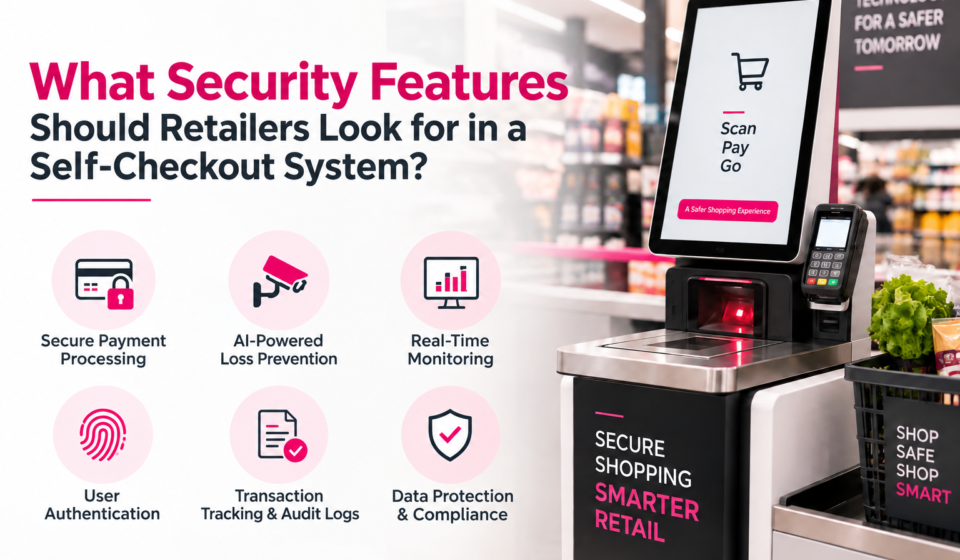
What Security Features Should Retailers Look for in a Self-Checkout System?

Ever watched a customer breeze through checkout without a single staff member scanning an item, and wondered what is actually stopping someone from walking out with an unscanned product tucked under their arm? That worry is exactly why security cannot be an afterthought when choosing a self-checkout system in Bahrain. Retailers who get this right protect their margins without slowing down the very convenience customers came for. Keep reading, because the features covered here will shape how safely and smoothly your checkout counters actually run.
What Exactly Is a Self Checkout System?
A self-checkout system is a retail setup that lets customers scan, bag, and pay for their own items without a cashier handling the transaction. It combines hardware like scanners and payment terminals with software that tracks every action at the counter in real time.
Why Security Cannot Take a Back Seat Here
Removing a cashier from the process also removes a natural checkpoint that used to catch mistakes and theft. Without the right safeguards, retailers open themselves up to scan avoidance, ticket switching, and payment fraud, all of which quietly eat into profit margins over time.
Core Security Features Every Self-Checkout System in Bahrain Should Have
1. Weight Verification Sensors
These sensors compare the scanned item’s expected weight against what actually lands in the bagging area. A mismatch instantly flags the transaction, catching common tricks like scanning a cheap item while bagging something pricier sitting right next to it.
2. Real-Time Video Surveillance Integration
Linking checkout stations directly to store cameras lets staff or AI systems watch transactions as they happen. This creates a visual trail for every purchase, making it far easier to review flagged incidents without digging through hours of unrelated footage.
3. Barcode Tampering Detection
Some shoppers try covering barcodes or scanning through packaging to trigger errors that skip items entirely. Systems with tampering detection recognize unusual scan patterns and pause the transaction, prompting staff intervention before the customer moves forward.
4. Age and Restricted Item Verification
For items like alcohol or age-restricted products, the system should automatically pause and route the transaction to a staff member for identity verification. This keeps compliance intact without requiring a full-time cashier at every single station.
5. Secure Payment Encryption
Every transaction should run through end-to-end encrypted payment channels, protecting card details from interception. Given how much sensitive customer data flows through these terminals daily, weak encryption is simply not a risk worth taking.
Extra Layers Worth Considering
- Randomized receipt checks at store exits to deter deliberate scan skipping
- Staff override logs that record every manual correction made at a station
- Alerts that notify supervisors the moment a suspicious pattern repeats across multiple transactions
The Bigger Picture: Security Meets Hospitality Tech
Retail and hospitality businesses across the region are realizing that checkout security does not exist in isolation. Many retailers pairing self-checkout with the best hospitality software in Dubai find that unified systems make fraud patterns easier to spot across multiple locations. The same holds true for operators searching for the best hospitality software in Bahrain, where connected platforms give managers a clearer view of both sales and security in one place.
Getting the Balance Right
A checkout system loaded with every possible security feature is not automatically the right choice. Retailers need to weigh customer experience against protection, since overly strict systems can frustrate honest shoppers just as much as they deter dishonest ones. The goal is friction where it counts and speed everywhere else.
Wrapping It Up
Choosing the right self-checkout system in Bahrain comes down to balancing convenience with genuine protection against loss. From weight sensors to encrypted payments, each feature plays its part in keeping transactions honest without turning checkout into an interrogation. Retailers who invest in the right combination of these tools end up protecting their bottom line while still giving customers the fast, self-serve experience they expect.
FAQs
Can self-checkout systems fully replace staff at a retail store?
Not entirely. Staff is still needed for age verification, troubleshooting, and monitoring flagged transactions, making self-checkout a complement to human oversight rather than a full replacement.
How do weight sensors actually reduce theft at checkout?
They compare the expected weight of a scanned item to the actual weight placed in the bagging area, instantly flagging mismatches that suggest scan avoidance or item substitution.
Is customer data safe when using self-checkout terminals?
Yes, provided the system uses end-to-end payment encryption. Retailers should always confirm this before installation, since weak encryption puts sensitive card details at unnecessary risk.
Do smaller retail stores really need advanced checkout security features?
Yes, theft and fraud risks are not limited to large stores. Smaller retailers often face proportionally higher losses, making even basic security features a worthwhile investment.
What is the biggest mistake retailers make with self-checkout security?
Over-relying on technology alone. Security features work best alongside trained staff who can respond quickly to flagged transactions instead of leaving the system to handle everything independently.