
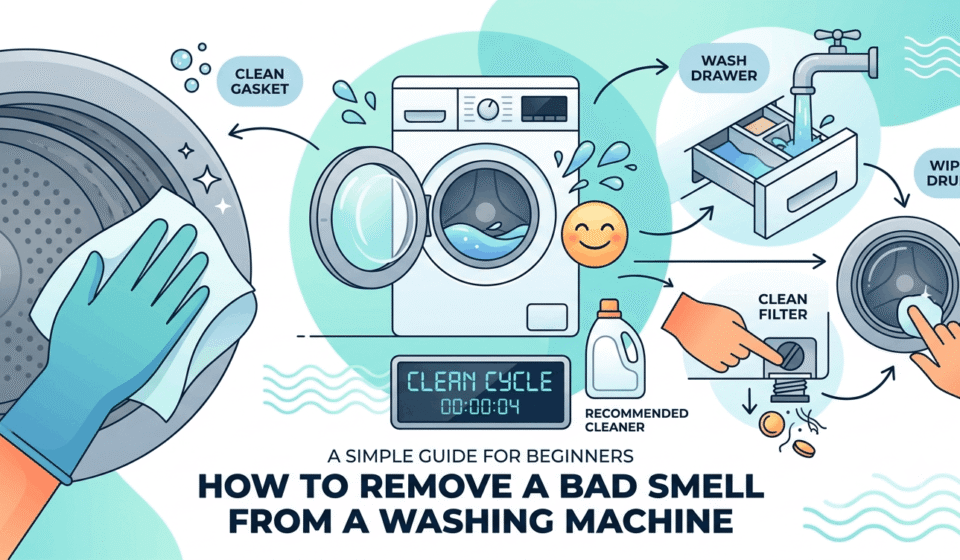

The best way to remove a bad smell from a washing machine is to clean the drum, rubber door gasket, detergent drawer, and drain filter, then run the manufacturer’s recommended cleaning cycle. Musty odors can come from mold, mildew, detergent residue, trapped water, or microbial buildup inside these parts. This guide walks through what causes the smell, exactly how to clean each part, and what to do if the odor just won’t quit.
Quick Answer
Clean the door gasket, detergent drawer, drum, and drain filter, then run your machine’s recommended cleaning cycle. Leave the door or lid open afterward, along with the detergent drawer, so everything can dry out. If the smell comes back, check the drain hose and drainage system for trapped water or buildup.
Why Does a Washing Machine Smell?
Moisture, residue, and bacteria get trapped inside your machine between washes, and that combination is what causes the smell. The door seal and detergent drawer stay damp longer than the rest of the machine, which gives bacteria and biofilm a place to settle in and stick around. Detergent and fabric softener don’t help either. They leave behind a sticky film, and that film traps bacteria over time.
Researchers have actually looked into this. Washing machines host surprisingly complex microbial communities, and those communities survive regular laundering. According to a study by Callewaert et al. in Frontiers in Microbiology, researchers examined five household washing machines and found several biofilm-forming bacteria enriched in the washing machine effluent after laundering.
A few everyday habits can contribute to buildup. A 2024 review found that microbial diversity varies by location inside washing machines, with the detergent drawer showing the highest diversity among the locations discussed in the review, followed by the sump, textile fibers, and door seal. According to a review by Osta-Ustarroz et al. in Antibiotics, biofilm forms across metal, plastic, and rubber surfaces throughout the machine, which gives odor-causing bacteria several different places to set up shop.
Common Causes of Washing Machine Odor
- Mold and mildew growing inside the drum and gasket
- Standing water left in the drum or drain hose
- Detergent buildup coating the drum walls and dispenser
- Fabric softener residue clinging to the drum and gasket
- A dirty or clogged drain filter
- Closing the door right after a wash cycle finishes
- Frequent cold washing without an occasional hot maintenance cycle
- Poor drainage from a kinked or clogged hose
How to Remove a Bad Smell From a Washing Machine
A quick wipe of the drum won’t cut it. You need to work through every part that holds moisture. Follow these steps in order.
1. Clean the Rubber Door Gasket
The rubber gasket wraps around the door on front-load machines, and it traps water, hair, lint, and detergent after every wash. Pull back the folds and look for dark spots or slimy residue. Wipe the whole seal down with a cloth and a cleaner your manufacturer recommends, then dry it completely with a clean towel.
2. Clean the Detergent Drawer
Detergent and fabric softener residue builds up inside the dispenser drawer fast, and it’s one of the strongest sources of odor in the whole machine. Remove the drawer following your manufacturer’s instructions and rinse it under warm water. Use a small brush to get into the corners and channels where softener likes to cake up, then let the drawer air dry before you slide it back in.
3. Clean the Washing Machine Drum
The drum holds the most stubborn odors, especially on front-load models with a rubber boot. Check your owner’s manual for a drum cleaning cycle or tub clean setting. Run that cycle empty, using whatever cleaning product your manufacturer specifies for your model.
4. Clean the Drain Filter
The drain filter catches lint, coins, hair, and other debris before it can clog the drain line. When it clogs, it can trap water and debris, creating conditions that support microbial growth and unpleasant odors. Find the filter panel, usually near the bottom front of the machine, set a shallow container underneath it, and clear out any trapped debris before you put the filter back.
5. Run a Cleaning Cycle
Many modern washing machines include a dedicated cleaning or sanitize cycle that may use higher temperatures than a normal wash. Run this cycle according to your manufacturer’s recommendations to help address residue and buildup.
6. Let the Washing Machine Dry Completely
Trapped moisture can contribute significantly to recurring odors, so drying the machine matters alongside regular cleaning. Leave the door or lid open after every wash so air can move through the drum. Crack the detergent drawer open too, so residue doesn’t sit around in standing water.
Quick Fix Guide by Washing Machine Smell Type
|
Problem |
What to Check |
What to Do |
|
Musty smell |
Door gasket, drum |
Clean buildup and run a manufacturer recommended cleaning cycle |
|
Detergent smell |
Detergent drawer |
Remove the drawer and clean out residue |
|
Rotten or sewage-like smell |
Drain filter, drain hose |
Check drainage and clear the drain filter |
|
Sour smell |
Standing water, residue |
Clean affected areas and let the machine dry fully |
|
Smell returns quickly |
Hidden buildup or drainage issue |
Inspect the filter, hose, and gasket together |
What Should You Avoid When Cleaning a Washing Machine?
A few shortcuts cause bigger problems than the smell they’re trying to fix. Keep these guidelines in mind.
- Don’t mix bleach and vinegar or other acidic cleaners. That combination produces harmful fumes.
- Don’t use more detergent than the load actually needs. Excess detergent is one of the leading causes of residue buildup.
- Don’t skip the drain filter. Trapped debris there causes some of the strongest odors you’ll find.
- Don’t use a cleaning product your manufacturer hasn’t approved for your specific model.
- Don’t close the door right after a cycle finishes.
- Don’t assume a scent booster or fragrance product fixes an underlying buildup problem. It only covers it up.
Always check your washing machine’s manual before using vinegar, bleach, or a commercial cleaning product inside the machine.
Why Does a Washing Machine Still Smell After Cleaning?
If the smell lingers after a full cleaning, you probably missed a spot. Mold likes to hide deep in the folds of the gasket, right where a quick wipe never reaches. A partially clogged drain hose can also trap water further down the line than the visible filter can fix.
Washing on cold too often can add to the problem as well. Cold washes work fine for many fabrics, but they may not provide the higher temperatures used by some maintenance cycles to help address buildup. Running a periodic maintenance cycle, following your manufacturer’s recommendations, helps clear out what everyday washing leaves behind.
If the smell sticks around even after you’ve cleaned every accessible part, the problem might sit in the drain hose, an internal seal, or another mechanical part you can’t reach on your own. At that point, calling in a professional for professional repair may make more sense than repeating the same steps over and over.
How Often Should You Clean a Washing Machine?
How often you need to clean your machine depends on how often you run it, what kind of loads you wash, and what your manufacturer recommends. A household running loads daily builds up residue faster than one doing a few loads a week. Check your owner’s manual for a suggested schedule, since that gives you the most accurate starting point for your specific model.
As a general rule, wipe the gasket and leave the door open after every wash. Clean the detergent drawer on a regular basis, and run a full maintenance cycle according to your manufacturer’s recommendations. These small habits, done consistently, prevent the kind of buildup that leads to stronger odors down the road.
Frequently Asked Questions
How does a musty smell affect the clothes coming out of a washing machine?
Bacteria and odor-causing microorganisms can persist inside the machine and transfer that smell onto laundered clothes. If clothes keep smelling after a wash, cleaning the machine addresses the actual source instead of just masking it with extra detergent or fragrance.
Why does a washing machine smell like sewage instead of a musty smell?
A sewage-like smell usually points to the drain system, not the drum. Look for a clogged drain filter, a blocked hose, trapped water, or a drainage issue in the plumbing connected to the machine. Check the filter and hose first before you assume the drum needs cleaning.
Can too much detergent make a washing machine smell worse?
Yes. Excess detergent doesn’t rinse away fully, and it builds up along the drum and dispenser over time. Stick to the amount recommended on the packaging instead of adding extra for a “deeper clean,” and you’ll cut down on buildup significantly.
Should a washing machine door stay open between loads?
Yes. Leaving the door open after each wash lets the drum dry out and keeps mold and bacteria from getting the moisture they need to grow. This one habit alone prevents a lot of the odor problems covered in this guide.
How can a household tell the difference between a cleaning issue and a repair issue?
A cleaning-related odor should improve once you clean the gasket, drum, drawer, and filter and run a maintenance cycle. If the smell hangs around after all that, the cause likely sits in the drain hose, drainage system, or an internal component that needs a professional look.
Does washing machine brand or type affect how often odor develops?
Front-load machines tend to hold moisture around the door seal, which can lead to odor if that area stays damp between washes. Both front-load and top-load machines can develop a smell when moisture, residue, or bacteria build up inside. Either way, the fix stays the same: let the machine dry, clean the filter when your model has one, and run a periodic maintenance cycle based on your manufacturer’s recommendations.