

Laundry looks simple until a favorite shirt shrinks, a white top turns gray, or a dark garment leaves half the load covered in lint. The good news is that how to do laundry at home step by step is easier to understand when you treat it as a process rather than simply putting clothes into a washing machine.
From sorting clothes and checking care labels to choosing the right detergent, wash cycle, water temperature, and drying method, each step affects the final result. This guide explains how to wash clothes at home safely and efficiently, whether you use a fully automatic washing machine, a semi-automatic machine, or wash clothes by hand.
How to Do Laundry at Home Step by Step
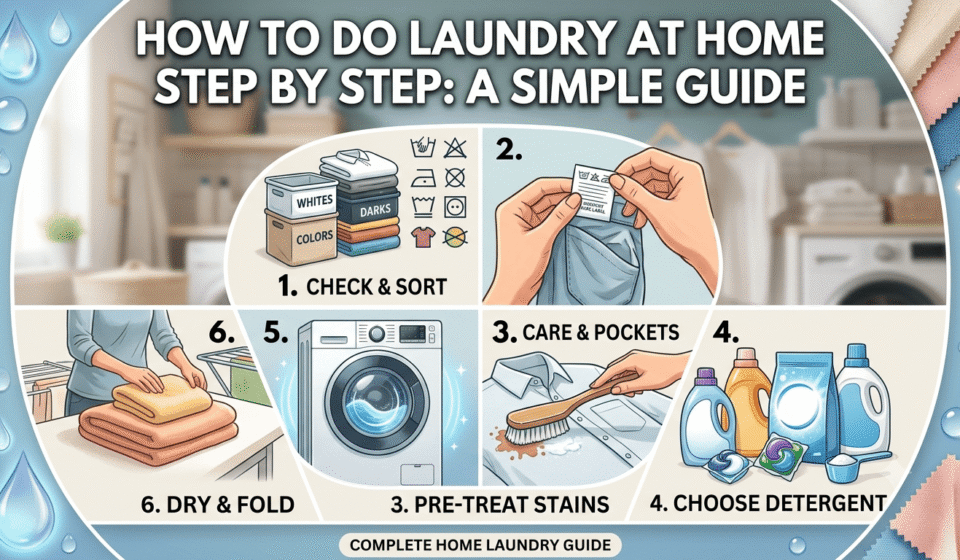
The basic laundry process is:
- Check clothing care labels.
- Separate clothes by color, fabric, and washing requirements.
- Empty pockets and prepare garments.
- Pre-treat stains.
- Choose the correct detergent.
- Load the washing machine correctly.
- Select the appropriate water temperature and wash cycle.
- Start the wash.
- Remove clothes promptly after washing.
- Dry clothes according to the fabric.
- Fold or hang them properly.
- Clean the washing machine regularly.
The details matter because different fabrics, colors, and stains need different treatment.
Step 1: Check the Care Labels Before Washing
Before sorting your laundry, look at the care label inside each garment. It provides important instructions about washing, bleaching, drying, ironing, and sometimes dry cleaning.
A garment may look like an ordinary cotton shirt but still require cold washing or air drying.
Common care symbols indicate whether an item can be:
- Machine washed
- Hand washed
- Washed only in cold water
- Tumble dried
- Air dried
- Ironed
- Bleached
- Professionally dry cleaned
If you are unsure about a garment, choose the gentler option. Cold water, a delicate cycle, and air drying are generally safer than exposing an unfamiliar fabric to high heat.
Why care labels matter
The wrong temperature or drying method can cause shrinking, color fading, stretching, or fabric damage. Spending a minute checking the label can prevent an expensive mistake.
Step 2: Sort Your Laundry
Sorting is one of the most important parts of doing laundry correctly.
Instead of putting everything into one load, separate clothes according to their color, fabric, and care requirements.
A simple system is:
Whites
Wash white shirts, socks, towels, and other white garments together when their care instructions are compatible.
Darks
Black, navy, dark gray, and other deep colors should generally be washed separately from light-colored clothes, particularly when they are new.
Colors
Bright or medium-colored garments can usually be washed together when their care requirements are similar.
Delicates
Items such as lace, fine knits, lingerie, or garments with delicate decorations may require a gentle cycle or hand washing.
Towels and heavier items
Towels, bath mats, and heavy cotton items can produce significant lint and require longer drying times. Washing them separately can make laundry easier to manage.
Practical tip: You do not need a separate pile for every color. The goal is to prevent dye transfer and avoid washing delicate fabrics with rough, heavy items.
Step 3: Prepare Clothes Before Putting Them in the Machine
Once your laundry is sorted, prepare each garment.
Empty all pockets. Coins, tissues, receipts, pens, and other objects can damage clothes or create problems inside the washing machine.
Then:
- Close zippers to prevent snagging.
- Fasten hooks when appropriate.
- Turn printed T-shirts inside out.
- Turn dark jeans and some dark garments inside out.
- Remove loose items from pockets.
- Separate heavily soiled clothing if necessary.
- Place small delicate items in a mesh laundry bag.
Turning certain garments inside out can reduce direct friction on the outer surface. This is especially useful for printed shirts and darker clothing that you want to keep looking new.
Step 4: Deal With Stains Before Washing
Do not assume that the washing machine will remove every stain.
Fresh stains are often easier to treat before washing. Gently remove excess material and apply an appropriate stain treatment according to the fabric and stain type.
For example, food, mud, grease, ink, and protein-based stains may require different approaches.
Avoid rubbing stains aggressively
Hard scrubbing can push a stain deeper into the fabric or damage the fibers. Instead, blot or gently work from the outside toward the center when the fabric allows it.
Always check the garment’s care instructions and, when using a stain-removal product, follow its directions.
An important laundry rule
Do not put a stained garment in the dryer until you are satisfied that the stain has been removed.
Heat can make some stains much more difficult to remove.
Step 5: Choose the Right Laundry Detergent
Laundry detergent helps loosen dirt, oils, and other residues from fabrics.
You can find detergents in liquid, powder, pod, and other formulations. The best choice depends on your washing machine, laundry needs, water conditions, and personal preference.
Use the amount recommended on the product label rather than assuming that more detergent means cleaner clothes.
Too much detergent can leave residue behind and may make clothes feel stiff or cause excess suds. Too little may not provide adequate cleaning for heavily soiled loads.
What about fabric softener?
Fabric softener is optional. It can change how fabrics feel and smell, but it is not necessary for every load.
For towels, athletic clothing, microfiber materials, and certain performance fabrics, check the care instructions before using fabric softener because it may affect absorbency or fabric performance.
Step 6: Load the Washing Machine Correctly
Do not pack the washing machine until there is no room left.
Clothes need enough space to move through the water and detergent. An overloaded drum can reduce cleaning performance and make rinsing less effective.
At the same time, running a nearly empty machine for every small group of clothes can waste water and energy.
How full should a washing machine be?
A useful rule is to avoid tightly compressing clothes into the drum. The exact capacity depends on the machine and cycle, so check the manufacturer’s instructions.
For many loads, clothes should have enough room to move freely rather than forming a tightly packed mass.
Front-load vs. top-load machines
Both can clean clothes effectively when used correctly. The main difference is how they handle water, movement, and loading.
Always follow the instructions supplied with your particular machine because cycle names and detergent requirements vary between models.
Step 7: Select the Right Water Temperature
Water temperature affects cleaning, color retention, fabric care, and energy use.
Cold water
Cold washing is useful for many everyday garments and can help reduce color fading and shrinkage. It can also be a practical choice for lightly soiled clothing.
Warm water
Warm water may be appropriate for certain everyday loads and can help with removing some types of dirt and oils, provided the care label allows it.
Hot water
Hot water should not automatically be treated as the best cleaning option. Some fabrics and colors can be damaged by high temperatures.
Use hot water only when the garment and washing instructions permit it, and there is a specific reason to do so.
Best practice: Let the care label and washing machine instructions guide your temperature choice rather than relying on the idea that hotter always means cleaner.
Step 8: Select the Correct Wash Cycle
Modern washing machines may offer numerous cycles, but you do not need to memorize all of them.
Choose the cycle based on the fabric and level of soil.
Common options include:
- Normal: Everyday durable clothing
- Quick: Small, lightly soiled loads when appropriate
- Delicate: Fragile or lightweight garments
- Heavy-duty: Heavily soiled, durable items
- Wool: Wool garments when specifically permitted
- Bedding: Sheets, blankets, or other large items when supported by the machine
A common mistake is choosing a heavy cycle for everything. More aggressive washing is not necessarily better. Excessive mechanical action can increase wear on fabrics.
Step 9: Start the Washing Machine
Once the clothes, detergent, temperature, and cycle are selected, start the machine.
If the machine provides options for spin speed, extra rinsing, or soil level, adjust them according to the load.
For example, delicate garments may benefit from gentler treatment, while a heavily soiled load may require a more intensive cycle.
During washing, avoid repeatedly opening the machine unless your model is designed for it. If the machine begins making unusual noises, vibrating excessively, or displaying an error, pause it and check the manufacturer’s instructions.
Step 10: Remove Clothes Promptly After Washing
When the cycle finishes, remove the laundry rather than leaving it sitting wet for hours.
Wet clothes left inside a closed machine can develop an unpleasant musty smell.
Shake garments gently before drying to reduce wrinkles and help them return to their natural shape.
This is particularly helpful for shirts, trousers, and other garments that wrinkle easily.
Step 11: Dry Clothes the Right Way
Washing is only half of the laundry process. Drying can have an equally significant effect on how long clothes last.
Air drying
Air drying is a good option for many garments. Hang or lay items according to their care instructions.
Avoid hanging heavy knitwear in a way that causes it to stretch. Some knitted garments are better dried flat.
Tumble drying
If a garment is dryer-safe, select the appropriate temperature and cycle.
High heat can contribute to shrinkage, fading, elastic damage, and fabric wear. When in doubt, use a lower temperature and follow the care label.
Sun drying
Sunlight can be useful for drying laundry, but prolonged exposure can contribute to fading in some dyed fabrics. Turn darker garments inside out or dry them in a suitable shaded area when necessary.
Step 12: Fold or Hang Clothes Properly
Once clothes are dry, do not leave them in a heap for the rest of the day.
Fold items that store better folded, such as T-shirts, casual trousers, towels, and many knitwear pieces. Hang shirts, dresses, jackets, and other garments that wrinkle easily when appropriate.
For clothes that are still slightly damp, make sure they are thoroughly dried before storing them. Moisture trapped in wardrobes or drawers can contribute to unpleasant odors and, under unsuitable conditions, mold growth.
How to Wash Clothes by Hand
Not every garment belongs in a washing machine.
Hand washing can be useful for delicate fabrics or garments whose labels specifically recommend it.
A simple method is:
- Fill a clean basin with the recommended water temperature.
- Add a suitable amount of detergent.
- Place the garment in the water.
- Gently move and press the fabric rather than aggressively scrubbing it.
- Allow it to soak if the care instructions permit.
- Rinse thoroughly with clean water.
- Press out excess water without twisting delicate fabrics aggressively.
- Dry according to the care label.
Hand washing does not mean soaking clothes indefinitely. Excessive soaking can affect some dyes, finishes, and fibers.
How Often Should You Wash Different Clothes?
There is no single washing schedule that works for every garment.
How often an item needs washing depends on sweat, direct skin contact, activity level, weather, fabric, and whether it has visible dirt or odor.
As a practical guide:
- Underwear and socks: Usually after each use
- Workout clothes: Usually after each use
- T-shirts: Often after one or a few wears, depending on use
- Jeans: Often less frequently than T-shirts if they remain clean and odor-free
- Towels: Wash regularly based on use and how well they dry between uses
- Bedding: Wash regularly according to household needs and care instructions
- Jackets and coats: Wash according to the garment’s care label and level of use
Washing clothing unnecessarily can increase fabric wear. The goal is not to wash everything after every use; it is to maintain cleanliness while avoiding unnecessary damage.
Common Laundry Mistakes to Avoid
Even people who have done laundry for years can make small mistakes.
Overloading the washing machine
Too many clothes can restrict movement and reduce cleaning effectiveness.
Using too much detergent
More detergent does not automatically produce cleaner laundry. Follow the manufacturer’s dosage instructions.
Mixing colors carelessly
A new dark or brightly dyed garment may release excess dye during early washes. Wash it separately when the care instructions or color make this a concern.
Ignoring care labels
A washing machine cannot compensate for a cycle that is unsuitable for the fabric.
Using excessive heat
High temperatures can damage fabrics and cause unwanted shrinkage.
Leaving wet clothes in the machine
This can contribute to musty odors.
Washing everything together
Towels, delicate garments, heavy jeans, and lightweight shirts do not necessarily belong in the same load.
Forgetting to clean the washing machine
A machine that regularly handles detergent, body oils, dirt, and moisture also needs maintenance.
How to Keep Your Washing Machine Clean
Laundry hygiene does not end with clean clothes.
Follow the manufacturer’s maintenance instructions. Depending on your machine, this may include cleaning the detergent drawer, wiping door seals, checking filters, and running a recommended machine-cleaning cycle.
For front-loading machines, leaving the door open after a cycle when safe to do so can help the interior dry.
Do not mix cleaning chemicals. If your machine requires a specific cleaning product or procedure, follow the manufacturer’s instructions rather than experimenting with household chemicals.
How to Save Water, Energy, and Time While Doing Laundry
Good laundry habits can also make household chores more efficient.
Wash full but not overloaded loads
Running appropriately sized loads can reduce the number of cycles you need.
Use cold water when suitable
Many everyday garments can be washed in cold water when their care instructions permit it.
Use quick cycles selectively
A quick cycle can be useful for lightly soiled clothing, but it is not automatically suitable for every load.
Air dry when practical
Air drying can reduce reliance on a dryer and may be gentler on certain garments.
Keep laundry sorted
Sorting clothes as they accumulate can make laundry day much faster. Separate hampers or compartments for lights, darks, and delicates can help.
What Should You Do With Clothes That Still Smell After Washing?
If clean clothes smell unpleasant, washing them again immediately is not always the best first step.
Check whether:
- The washing machine itself needs cleaning.
- Too many clothes were packed into the drum.
- Excess detergent was used.
- Clothes remained wet in the machine for too long.
- Items were not completely dried.
- The fabric requires a different washing method.
If an odor persists, review the garment’s care instructions and the washing machine manufacturer’s maintenance recommendations.
Laundry Tips for Families and Shared Homes
Laundry becomes more complicated when several people share the same machine.
A simple system helps.
Keep separate baskets for everyday clothing, towels, and delicate items if space permits. Teach household members to empty pockets and separate special-care garments before putting clothes in the laundry basket.
It can also help to wash similar loads together rather than waiting until the entire household’s clothing has accumulated.
For families with children, heavily stained clothing can be separated before the main wash so that it receives appropriate pre-treatment.
Laundry Tips for Small Homes and Apartments
Limited space does not require complicated laundry routines.
If you do not have room for multiple large hampers, use smaller labeled bags or compartments for sorting. A foldable drying rack can be useful when outdoor space is limited.
Wash smaller loads when necessary rather than allowing damp or heavily soiled clothing to sit for too long.
If you use a shared laundry facility, take your clothes out promptly after the cycle and keep detergent and laundry supplies organized so that each load can be handled efficiently.
Conclusion: Make Laundry Easier by Following the Right Order
Learning how to do laundry at home step by step is less about mastering complicated washing-machine settings and more about developing a reliable routine. Sort clothes, read care labels, treat stains early, use the right amount of detergent, select an appropriate cycle, and dry garments according to their fabric requirements.
The most useful laundry habit is also the simplest: treat different clothes differently. A delicate blouse, a pair of jeans, a bath towel, and a cotton T-shirt do not necessarily need the same treatment.
Once these habits become routine, laundry becomes faster, more predictable, and less likely to result in faded colors, damaged fabrics, stubborn stains, or unpleasant odors.
Frequently Asked Questions
1. Can I wash all my clothes together in one washing machine cycle?
It is better not to wash everything together. Separate laundry according to color, fabric, and care instructions. Heavy towels, delicate garments, dark clothing, and lightly colored items may require different temperatures or cycles to prevent damage and dye transfer.
2. Is it better to wash clothes in cold or hot water?
Neither temperature is universally better. Cold water is suitable for many everyday garments and can help protect colors and fabrics. Warmer temperatures may be appropriate for certain loads. Always prioritize the garment care label and washing machine instructions.
3. Why do clothes smell bad after coming out of the washing machine?
Musty-smelling laundry can result from leaving wet clothes in the machine, overloading the drum, using too much detergent, or a machine that needs cleaning. Make sure clothes dry thoroughly and follow the manufacturer’s maintenance instructions for the washer.
4. Should I wash new clothes before wearing them?
Washing new clothing before wearing it can be a sensible practice, particularly for garments worn directly against the skin. It also gives you an opportunity to remove manufacturing residues, excess dye, dust, or other materials that may remain from production and handling.
5. How can I prevent clothes from shrinking in the wash?
Check the care label, use the recommended water temperature, avoid unnecessary high heat, and choose an appropriate drying method. Some fabrics naturally shrink more than others. When a garment is labeled for air drying, avoiding high dryer temperatures is especially important.