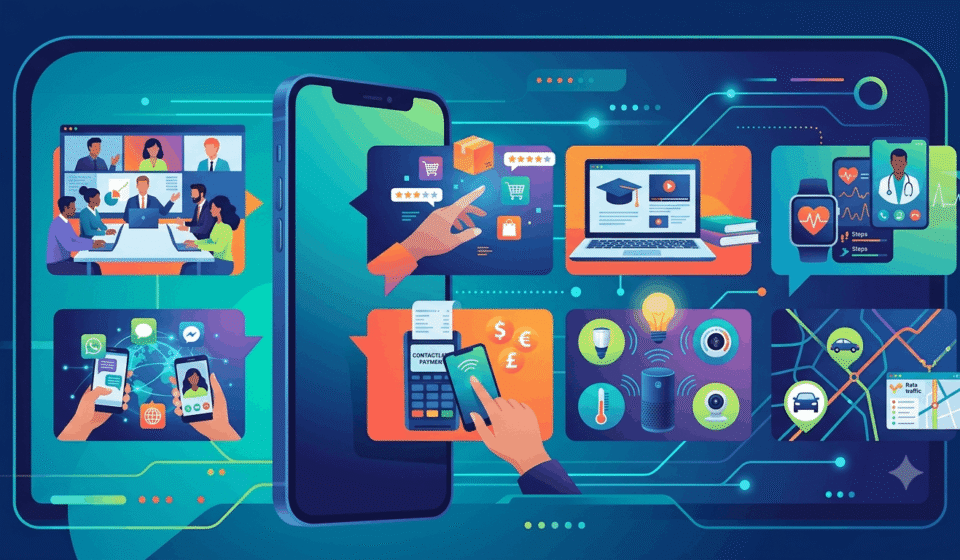

Technology no longer feels like something separate from everyday life. It is built into the way people communicate, work, shop, travel, learn, manage money, access healthcare, and even relax.
Understanding how technology is changing everyday life is not simply about listing new gadgets or popular apps. The bigger change is that digital tools are increasingly becoming part of ordinary decisions and routines. A smartphone can replace a map, wallet, camera, diary, ticket, and communication device. Artificial intelligence can help people write, search for information, organize tasks, or analyze data. Smart home systems can automate routine activities, while online services can make everything from banking to education more accessible.
These changes bring clear benefits, but they also create new challenges. Convenience must be balanced with privacy, security, digital wellbeing, and responsible use.
What Does It Mean When Technology Changes Everyday Life?
Technology changes everyday life when digital tools alter how people complete ordinary activities, solve problems, communicate, or make decisions.
The change can be obvious, such as using a smartphone for video calls. It can also be less visible, such as software helping a delivery company plan routes or a bank detecting unusual transactions.
In practical terms, technology is changing daily life by making many activities:
- Faster and more convenient
- More connected
- Easier to personalize
- More accessible from different locations
- More dependent on digital platforms and data
The important point is that technology does not always replace human activity. Often, it changes how the activity is performed.
For example, people still learn, work, shop, travel, and communicate. What has changed is the process.
How Technology Is Changing Everyday Life
Technology is transforming almost every aspect of modern life, including the way businesses gather and analyze information. While some technological changes are easy to notice, others are happening behind the scenes and quietly reshaping business processes. One growing example is Market Research with AI, which is helping businesses collect insights, understand customer behavior, and make more informed decisions efficiently.
1. Communication Has Become Faster and More Flexible
One of the clearest examples of the impact of technology on everyday life is communication.
People can now communicate across countries within seconds using messaging platforms, email, video calls, and social networks. Families living in different cities can maintain regular contact without needing to travel. Businesses can collaborate with international teams without everyone being in the same office.
Technology has also changed the expectations surrounding communication.
A message can be sent at any time, meetings can happen virtually, and information can be shared instantly. This creates flexibility, but it can also make people feel pressure to remain constantly available.
A useful approach is to treat digital communication as a tool rather than an obligation. Turning off unnecessary notifications, setting communication boundaries, and choosing the right channel for each conversation can make technology more useful without allowing it to dominate the day.
2. Smartphones Have Become Everyday Utility Tools
The modern smartphone is much more than a device for making calls.
A single phone can provide navigation, online banking, entertainment, photography, shopping, ticketing, news, education, health information, and access to work applications.
This convergence of functions is one reason smartphones have had such a significant influence on daily routines.
Instead of carrying several separate devices or visiting physical locations for simple tasks, users can often complete them from one screen.
For example, someone travelling to an unfamiliar city can use a smartphone to:
- Find directions.
- Check public transport information.
- Translate unfamiliar text.
- Make a digital payment.
- Contact a hotel.
- Share their location with someone they trust.
The benefit is convenience. The trade-off is greater dependence on a device and the services connected to it.
3. Work Has Become More Connected
Technology has fundamentally changed the modern workplace.
Cloud platforms, video conferencing, project management software, collaborative documents, and digital communication tools allow teams to work together even when employees are in different locations.
Remote and hybrid work have made this especially visible. Employees can attend meetings, access documents, communicate with colleagues, and complete many professional tasks without being physically present in a traditional office.
Automation is also changing the nature of work.
Repetitive activities such as scheduling, data processing, reporting, and basic customer queries can increasingly be handled by software. This does not necessarily mean that technology eliminates entire jobs. In many cases, it shifts human attention toward tasks requiring judgment, creativity, communication, and problem-solving.
For workers, the practical lesson is clear: digital literacy is becoming a basic professional skill rather than a specialist advantage.
How AI Is Changing Everyday Life
Artificial intelligence is one of the most important technology trends in everyday life because it is moving from specialized applications into ordinary consumer tools.
AI can recommend content, improve search results, translate languages, recognize images, detect unusual financial activity, assist with writing, provide navigation suggestions, and support customer service.
Generative AI has expanded this further by allowing people to interact with technology using natural language.
Someone can ask an AI system to explain a difficult concept, summarize information, brainstorm ideas, organize a plan, or help compare options.
However, convenience does not make every AI-generated answer automatically reliable.
Users should verify important information, particularly when decisions involve finances, legal matters, safety, health, or other high-stakes subjects.
The best use of AI in everyday life is often as an assistant rather than an unquestioned authority.
4. Shopping Has Become More Personalized
Technology has changed shopping from a primarily physical experience into an increasingly connected one.
Consumers can research products, compare specifications, read reviews, watch demonstrations, check availability, place orders, and track deliveries from a phone or computer.
Recommendation systems can also personalize what shoppers see based on previous activity.
This can make product discovery easier, especially when someone knows what type of product they need but does not know which option to choose.
At the same time, personalization can encourage impulse purchases. A useful habit is to separate discovery from decision-making.
Before buying, consumers should consider:
- Do I actually need the product?
- Does it solve the problem I have?
- Are the specifications suitable?
- Are reviews consistent across multiple sources?
- What are the return and warranty conditions?
- Is the seller trustworthy?
Technology can make buying easier, but good purchasing decisions still require human judgment.
5. Digital Payments Are Changing How People Manage Money
Digital banking and payment technologies have transformed everyday financial activities.
People can transfer money, pay bills, monitor transactions, manage subscriptions, deposit funds, and access financial information without visiting a physical branch.
Contactless payments and digital wallets have also made small transactions faster.
Behind the scenes, technology can help financial institutions identify suspicious activity and improve fraud detection.
But increased digital convenience also increases the importance of cybersecurity.
People should use strong, unique passwords, enable multi-factor authentication where available, avoid sharing verification codes, and be cautious about unfamiliar links or payment requests.
Convenience is valuable, but financial security should never be treated as an afterthought.
6. Healthcare Is Becoming More Accessible Through Technology
Technology is also changing how people interact with healthcare.
Online appointment systems, electronic health records, telehealth services, wearable devices, and digital health platforms can make certain healthcare processes more convenient.
Wearable technology can monitor measurements such as activity, heart rate, sleep patterns, or other indicators depending on the device.
These tools can help people become more aware of their habits and provide useful information to discuss with qualified professionals.
However, consumer health technology has limitations. A smartwatch or app is not automatically equivalent to professional medical assessment.
The most responsible approach is to use digital health tools as sources of information and support while relying on qualified healthcare professionals for diagnosis and treatment decisions.
7. Education Is No Longer Limited to the Classroom
Technology has expanded access to learning.
Online courses, digital libraries, educational videos, virtual classrooms, interactive exercises, and AI-powered learning tools allow people to study from almost anywhere.
This is particularly valuable for lifelong learning. Someone can develop a new professional skill without enrolling in a traditional full-time program.
Technology can also support different learning styles. A student may read an explanation, watch a demonstration, practice with interactive exercises, or use digital tools to receive immediate feedback.
However, having unlimited information does not automatically create better learning.
The challenge has shifted from finding information to evaluating information.
Students and professionals need to distinguish credible sources from unreliable content, check evidence, and understand when an answer requires expert verification.
8. Transportation Has Become More Data-Driven
Travel and transportation provide another practical example of technology and daily life working together.
Navigation applications can calculate routes, estimate arrival times, identify traffic conditions, and suggest alternatives. Ride-hailing and digital ticketing services can simplify local transportation.
Modern vehicles are also increasingly equipped with sensors, driver-assistance systems, connected features, and software-based controls.
For businesses, technology can improve fleet management, route planning, maintenance scheduling, and logistics.
The result is not simply faster transportation. It is a transportation system that increasingly uses real-time information to make decisions.
Still, technology should support attentive human behavior rather than replace it. Drivers should never allow navigation systems, notifications, or other digital features to distract them from the road.
9. Smart Homes Are Automating Routine Tasks
Smart technology is gradually changing the home environment.
Connected lights, thermostats, security systems, appliances, speakers, cameras, and other devices can be controlled through applications or automated routines.
A smart home might automatically adjust lighting, manage temperature settings, provide security alerts, or turn devices on and off according to schedules.
The biggest advantage is not necessarily novelty. It is automation of repetitive tasks.
Before purchasing connected devices, consumers should consider compatibility, security updates, privacy settings, ongoing costs, and whether the device genuinely solves a problem.
A home does not become more intelligent simply because it contains more connected products.
Technology Is Making Life More Convenient, But Is It Always Better?
This is one of the most important questions surrounding the impact of technology on everyday life.
Technology can save time and reduce friction. But convenience can sometimes introduce new problems.
For example, instant communication can become notification overload. Easy access to entertainment can become excessive screen time. Personalized recommendations can narrow what people see. Automation can save effort but may also reduce opportunities to develop certain skills.
A useful way to evaluate technology is to ask four questions:
Does it save meaningful time?
If a tool creates more complexity than it removes, its value may be limited.
Does it improve the quality of the result?
Faster is not always better.
Does it give me more control?
Good technology should make important choices clearer, not manipulate users into making them.
What is the trade-off?
Consider privacy, cost, security, attention, and dependence before adopting a new technology.
What Are the Main Benefits of Technology in Daily Life?
The benefits of technology are easiest to understand when viewed through practical outcomes rather than individual devices.
Convenience
Digital services can reduce the time and effort needed to complete routine tasks.
Access
People can access information, education, communication, financial services, and professional opportunities from many locations.
Efficiency
Automation can reduce repetitive work and allow people to focus on more complex activities.
Connectivity
Technology makes it easier for people and organizations to communicate across geographical boundaries.
Personalization
Digital services can adapt recommendations, settings, and experiences to individual needs.
Accessibility
Assistive technologies can help people interact with digital services, information, communication, and physical environments in ways that may otherwise be difficult.
These advantages explain why technology has become deeply embedded in modern routines.
What Problems Can Technology Create in Everyday Life?
Technology also creates risks that users should understand.
Privacy Concerns
Many digital services collect information about users. People should understand what data is being collected and review privacy settings where practical.
Cybersecurity Risks
Phishing, scams, account theft, malware, and fraudulent messages remain important concerns.
Digital Distraction
Constant notifications can interrupt concentration and make it harder to maintain boundaries between work and personal life.
Misinformation
The speed at which information spreads makes source evaluation increasingly important.
Digital Dependence
When people rely heavily on connected services, outages or technical failures can become surprisingly disruptive.
Recognizing these risks does not mean rejecting technology. It means using it more deliberately.
How Can People Use Technology More Responsibly?
Responsible technology use does not require avoiding digital tools. It means understanding their benefits and limitations.
A few practical habits can make a meaningful difference:
- Review privacy and security settings periodically.
- Use multi-factor authentication for important accounts.
- Keep devices and applications updated.
- Avoid clicking suspicious links or attachments.
- Verify important information before acting on it.
- Turn off unnecessary notifications.
- Create technology-free periods during the day.
- Back up important files and photographs.
- Think carefully before purchasing connected devices.
- Use AI-generated information as assistance, not unquestioned fact.
These habits are simple, but they become increasingly valuable as more areas of life become digitally connected.
What Will Everyday Technology Look Like in the Future?
The next stage of digital transformation in daily life is likely to be less about individual gadgets and more about connected systems.
AI assistants may become more capable of handling routine tasks. Homes, vehicles, workplaces, and personal devices may communicate with one another more effectively. Wearable technology may become more sophisticated, while digital services may become increasingly personalized.
At the same time, consumers are likely to become more interested in questions of privacy, transparency, ownership, and control.
The most useful technologies will not necessarily be the most complicated. They will be the ones that solve real problems without creating unnecessary friction.
This suggests an important shift: the future of technology may be judged less by what technology can do and more by whether it improves people’s lives in meaningful ways.
How Should You Decide Whether a New Technology Is Worth Using?
When considering a new device, application, platform, or AI tool, avoid adopting it simply because it is popular.
Instead, evaluate it against a specific need.
Step 1: Identify the problem
What are you trying to make easier, faster, safer, or more accessible?
Step 2: Compare alternatives
Sometimes a simple existing solution works better than a new technology.
Step 3: Check privacy and security
Understand what information the service requires and how your account is protected.
Step 4: Consider long-term usefulness
A product may seem impressive during the first week but provide little practical value afterward.
Step 5: Maintain human judgment
Technology should support your decisions rather than automatically make important decisions for you.
This approach can help consumers avoid technology fatigue while still benefiting from useful innovation.
Conclusion: Technology Should Make Everyday Life Better, Not Simply More Digital
Understanding how technology is changing everyday life means looking beyond smartphones, artificial intelligence, smart devices, and apps. The deeper transformation is happening in the way people communicate, work, learn, travel, shop, manage money, access services, and make everyday decisions.
The benefits are significant: greater convenience, wider access, faster communication, increased efficiency, and new opportunities for learning and collaboration. But technology also brings responsibilities involving privacy, security, attention, and critical thinking.
The goal should not be to use technology simply because it is available. The better approach is to choose tools that solve genuine problems, understand their limitations, and use them intentionally.
As technology continues to evolve, the most valuable innovation will be the kind that fits naturally into human life, making everyday activities easier, more accessible, and more useful without taking away the judgment and control that people need.
Frequently Asked Questions
- How is technology changing everyday life for ordinary people?
Technology is changing everyday life by making communication, shopping, banking, education, transportation, entertainment, and many services faster and more accessible. It also introduces automation and personalization, allowing people to complete routine tasks with fewer steps while creating new responsibilities around privacy and digital security.
- What are the biggest benefits of technology in daily life?
The biggest benefits include convenience, faster communication, easier access to information, greater workplace flexibility, automation of repetitive tasks, personalized services, and improved accessibility. Technology can also help people learn new skills, manage everyday activities, and stay connected with others regardless of location.
- How is AI changing everyday life?
AI is becoming part of search, recommendations, customer service, navigation, writing tools, translation, fraud detection, and productivity applications. Generative AI can also help users create, summarize, explain, and organize information. However, important AI-generated information should be checked against reliable sources before it is used for high-stakes decisions.
- How can technology affect people’s daily habits?
Technology can make routines more efficient, but it can also influence attention, communication habits, shopping behavior, entertainment choices, and working patterns. Notifications and algorithmic recommendations can encourage frequent device use, making digital boundaries and intentional screen habits important parts of healthy technology use.
- What should people consider before adopting new technology?
People should consider whether the technology solves a genuine problem, how easy it is to use, what it costs, how it handles personal information, whether it receives security updates, and whether there are better alternatives. The most useful technology is usually the technology that provides lasting practical value.